
OFFSET
1,1
COMMENTS
Define a sieve operation with parameter s that eliminates integers of the form s^2 + s*i (i >= 0) from the set A000027 of natural numbers. The sequence lists those natural numbers that are eliminated by the sieve s=2 and cannot be eliminated by any sieve s >= 3. - R. J. Mathar, Jun 24 2009
After a(3)=8 all terms are 2*prime; for n > 3, a(n) = 2*prime(n-1) = 2*A000040(n-1). - Zak Seidov, Jul 18 2009
From Omar E. Pol, Jul 18 2009: (Start)
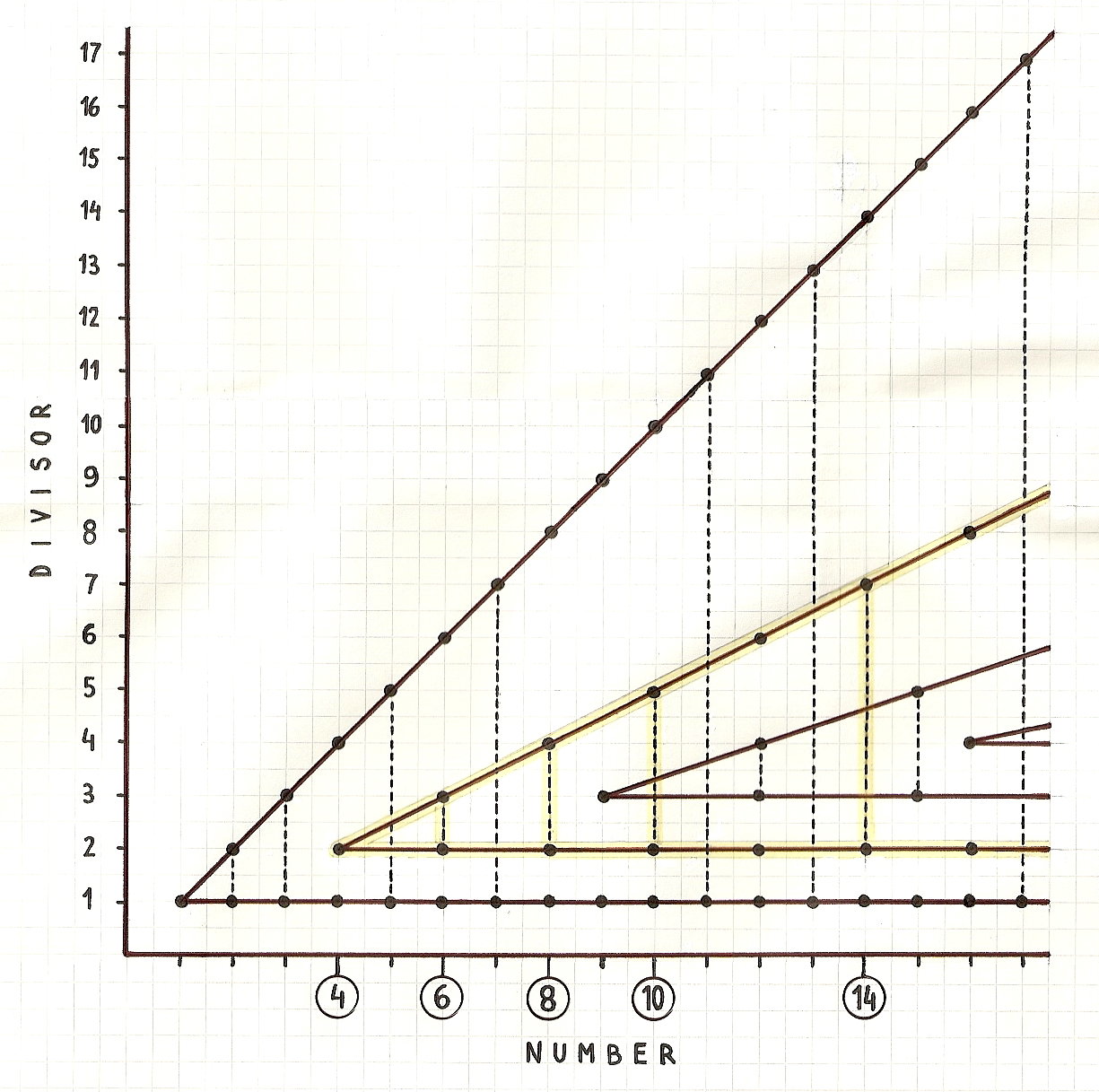
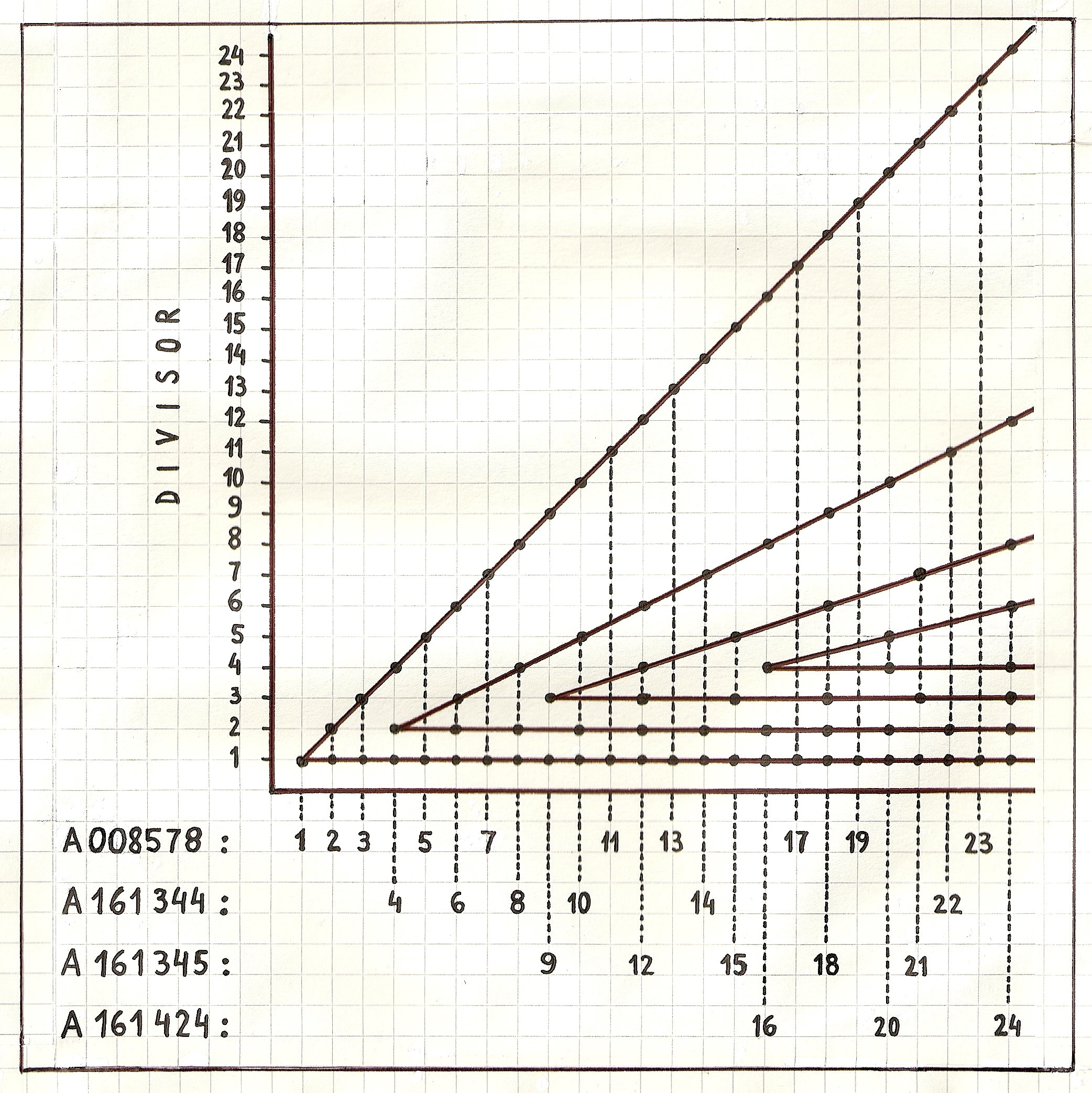
A classification of the natural numbers A000027.
=============================================================
Numbers k whose largest divisor <= sqrt(k) equals j
=============================================================
j Sequence Comment
=============================================================
1 ..... A008578 1 together with the prime numbers
2 ..... A161344 This sequence
3 ..... A161345
4 ..... A161424
5 ..... A161835
6 ..... A162526
7 ..... A162527
8 ..... A162528
9 ..... A162529
10 .... A162530
11 .... A162531
12 .... A162532
... And so on. (End)
The numbers k whose largest divisor <= sqrt(k) is j are exactly those numbers j*m where m is either a prime >= k or one of the numbers in row j of A163925. - Franklin T. Adams-Watters, Aug 06 2009
See also A163280, the main entry for this sequence. - Omar E. Pol, Oct 24 2009
Also A100484 UNION 8. - Omar E. Pol, Nov 29 2012 (after Seidov and Hasler)
LINKS
Omar E. Pol, Illustration: Divisors and pi(x)
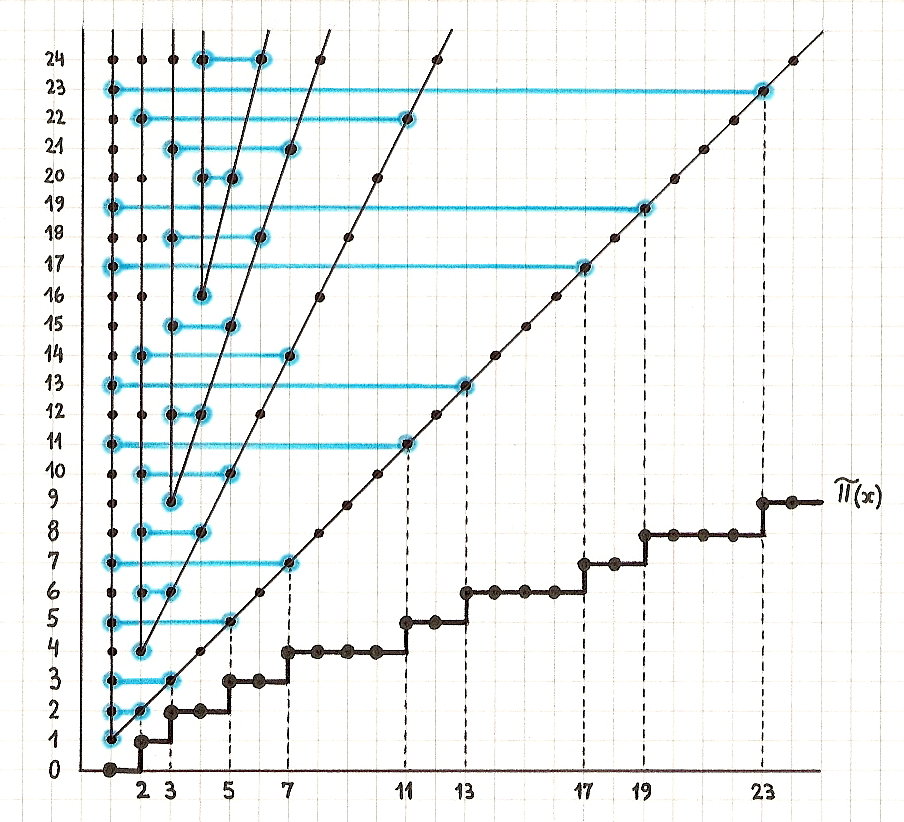
Omar E. Pol, Illustration of initial terms
FORMULA
Equals 2*A000040 union {8}. - M. F. Hasler, Nov 27 2012
MAPLE
isA := proc(n, s) if n mod s <> 0 then RETURN(false); fi; if n/s-s >= 0 then RETURN(true); else RETURN(false); fi; end: isA161344 := proc(n) for s from 3 to n do if isA(n, s) then RETURN(false); fi; od: isA(n, 2) ; end: for n from 1 to 3000 do if isA161344(n) then printf("%d, ", n) ; fi; od; # R. J. Mathar, Jun 24 2009
MATHEMATICA
a[n_] := If[n <= 3, 2n+2, 2*Prime[n-1]]; Table[a[n], {n, 1, 56}] (* Jean-François Alcover, Nov 26 2012, after Zak Seidov *)
PROG
(PARI) a(n)=if(n>3, prime(n-1), n+1)*2 \\ M. F. Hasler, Nov 27 2012
CROSSREFS
KEYWORD
easy,nonn
AUTHOR
Omar E. Pol, Jun 20 2009
EXTENSIONS
More terms from R. J. Mathar, Jun 24 2009
Definition added by R. J. Mathar, Jun 28 2009
STATUS
approved