
OFFSET
0,3
COMMENTS
a(n) is the total number of integer toothpicks after n steps.
It appears that this sequence is related to triangular numbers, Mersenne primes and even perfect numbers. Conjecture: a(A000668(n))=A000217(A000668(n)). Conjecture: a(A000668(n))=A000396(n), assuming there are no odd perfect numbers.
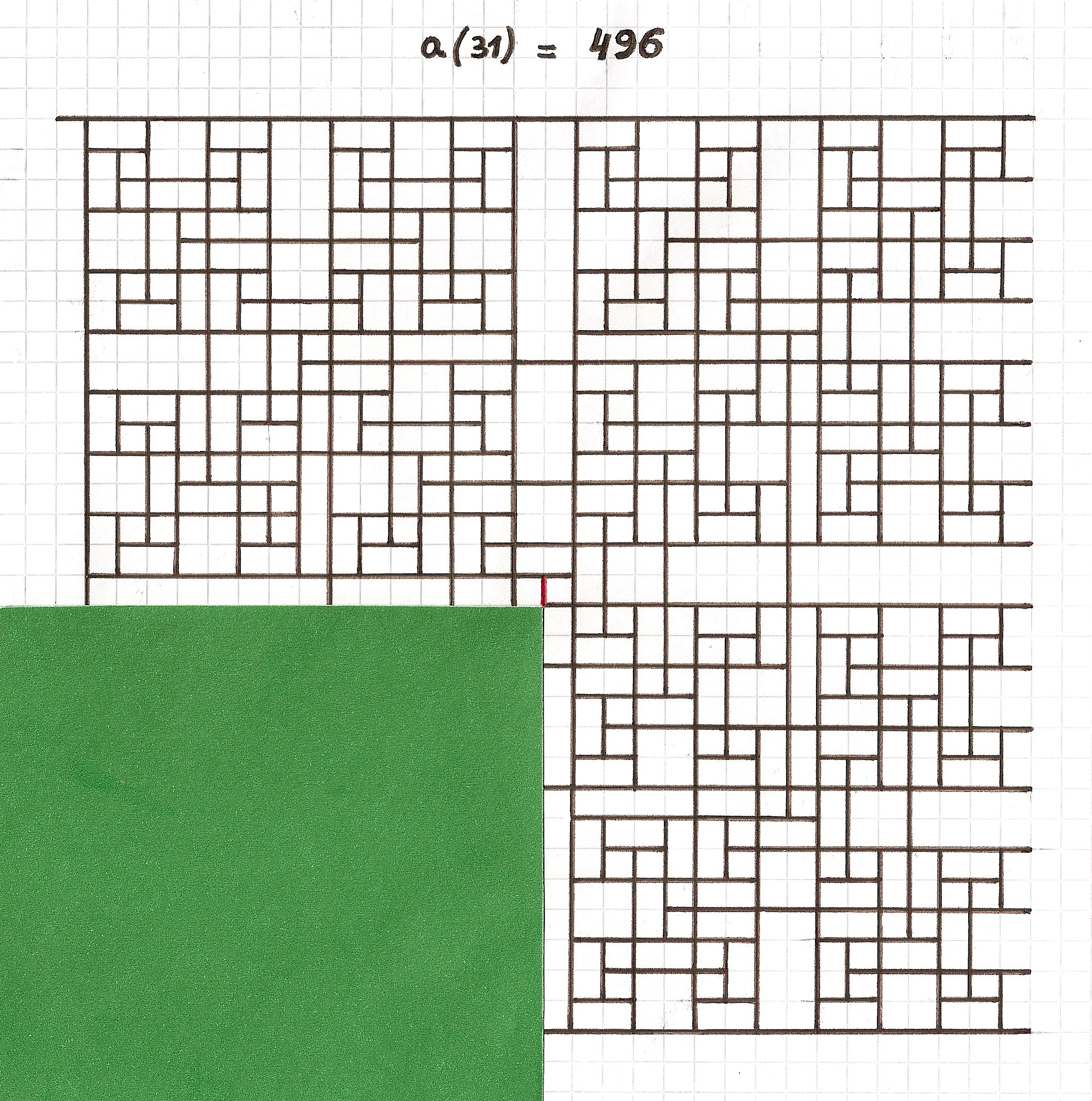
The Mersenne prime conjectures are true, but aren't really about Mersenne primes. a(2^i-1) = 2^i (2^i-1)/2 for all i (whether or not i or 2^i-1 is prime). This follows from the formulas for A139250(2^i-1) and A139250(2^i). - David Applegate, May 11 2009
Equals A151550 convolved with [1, 2, 2, 2, ...]. (This is equivalent to the observation that the g.f. is x((1+x)/(1-x)) * Product_{n >= 1} (1 + x^(2^n-1) + 2*x^(2^n)).) Equivalently, equals A151555 convolved with A151575. - Gary W. Adamson, May 25 2009
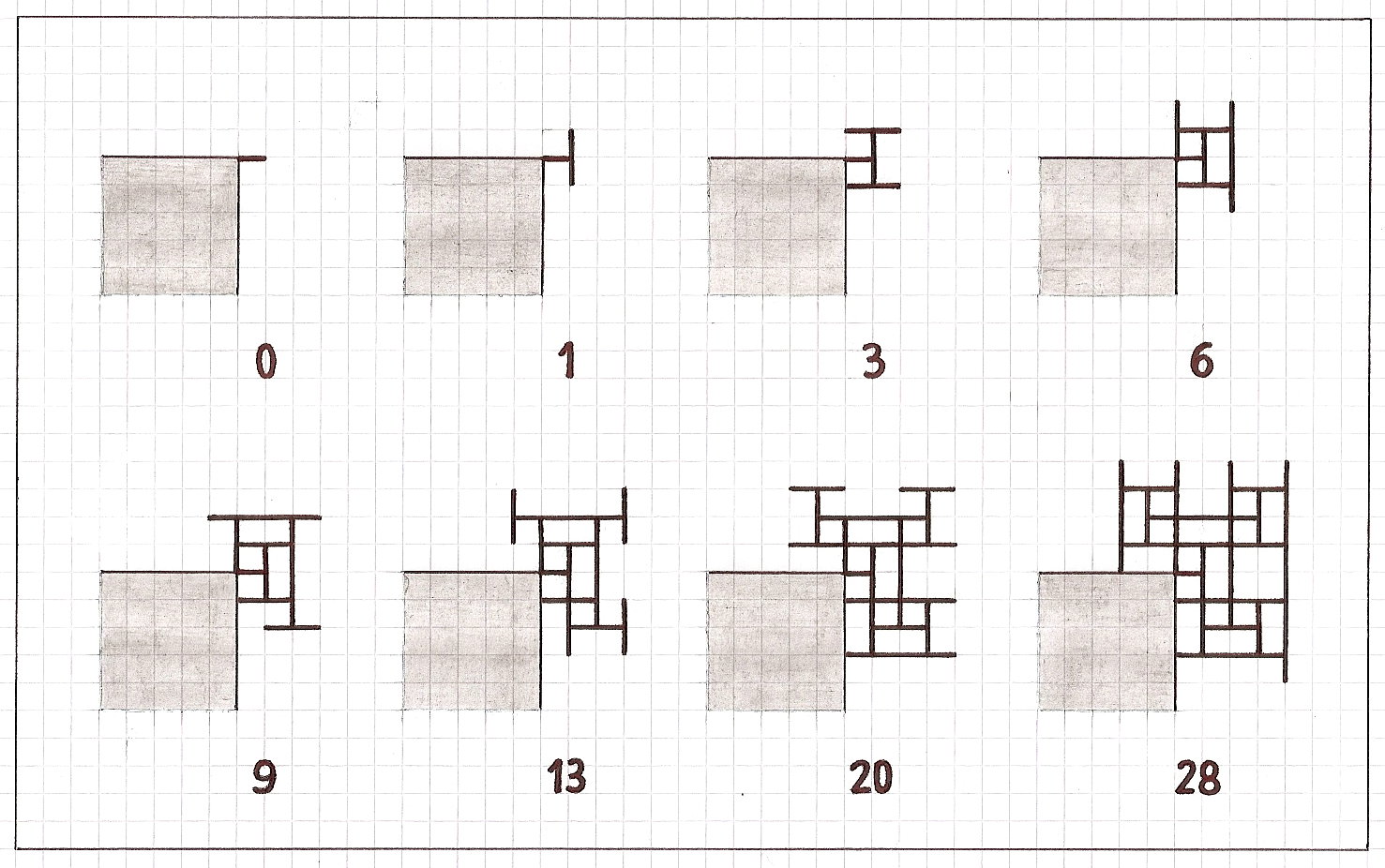
It appears that a(n) is also 1/4 of the total path length of a toothpick structure as A139250 after n-th stage which is constructed following a special rule: toothpicks of the new generation have length 4 when are placed on the square grid (every toothpick has four components of length 1), but after every stage, one (or two) of the four components of every toothpick of the new generation is removed, if such component contains a endpoint of the toothpick and if such endpoint is touching the midpoint or the endpoint of another toothpick. The truncated endpoints of the toothpicks remain exposed forever. Note that there are three sizes of toothpicks in the structure: toothpicks of length 4, 3 and 2. a(n) is also 1/4 of the number of grid points that are covered after n-th stage, except the central point of the structure. A159795 gives the total path length and also the total number of components in the structure after n-th stage. - Omar E. Pol, Oct 24 2011
LINKS
N. J. A. Sloane, Table of n, a(n) for n = 0..16387
David Applegate, The movie version
David Applegate, Omar E. Pol and N. J. A. Sloane, The Toothpick Sequence and Other Sequences from Cellular Automata, Congressus Numerantium, Vol. 206 (2010), 157-191. [There is a typo in Theorem 6: (13) should read u(n) = 4.3^(wt(n-1)-1) for n >= 2.]
Omar E. Pol, Illustration of initial terms
Omar E. Pol, Illustration of A153006(31) = 496
N. J. A. Sloane, Catalog of Toothpick and Cellular Automata Sequences in the OEIS
FORMULA
G.f.: x*((1 + x)/(1 - x)) * Product_{n >= 1} (1 + x^(2^n-1) + 2*x^(2^n)). - N. J. A. Sloane, May 20 2009
MAPLE
G:=x*((1 + x)/(1 - x)) * mul( (1 + x^(2^n-1) + 2*x^(2^n)), n=1..20); # N. J. A. Sloane, May 20 2009
CROSSREFS
KEYWORD
nonn
AUTHOR
Omar E. Pol, Dec 17 2008, Dec 19 2008, Apr 28 2009
EXTENSIONS
Edited by N. J. A. Sloane, Dec 19 2008
STATUS
approved